

The cottage cheese "shortage" isn't really a shortage.

Walk into a grocery store in Canada today and you might notice something unusual: empty space where cottage cheese used to be.
For some consumers, that immediately feels like another signal that something in the food system is broken. Prices are higher, shelves aren’t full, and the natural conclusion is that something isn’t working.
But this is actually a much more familiar—and more interesting—story.
This isn’t a supply failure. It’s a demand shock.
The system isn’t broken. It’s adjusting.
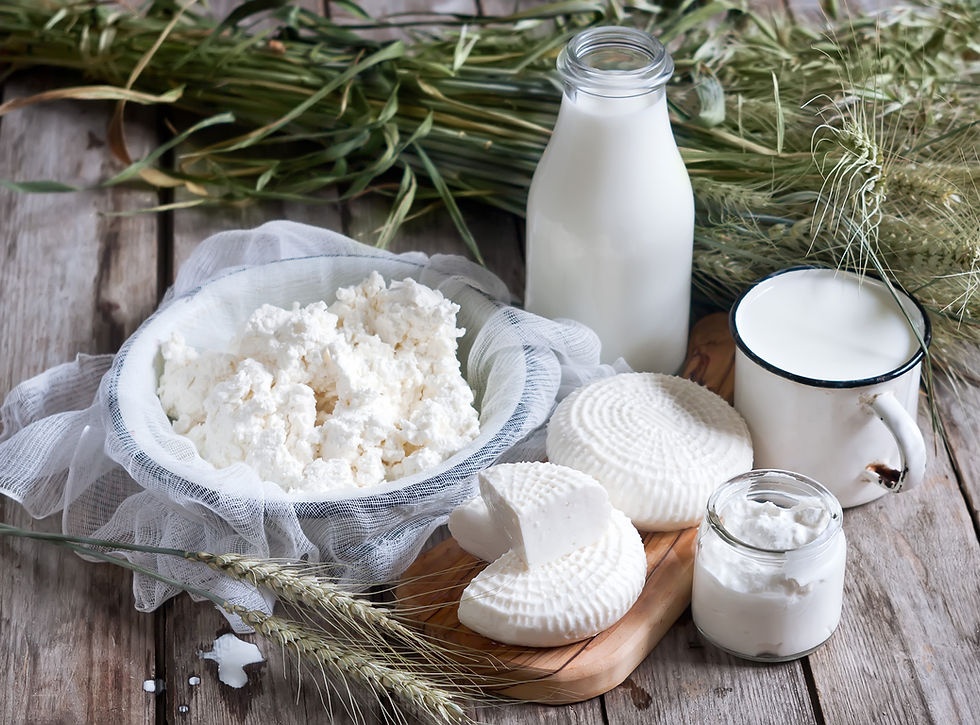
The sudden rise of cottage cheese
For decades, cottage cheese has been a relatively stable, niche product—often associated with diet culture and overshadowed by options like Greek yogurt, smoothies, or protein bars.
That changed quickly. Driven largely by social media, and more broadly by a shift toward higher-protein diets, cottage cheese has had a resurgence. It’s showing up in pasta sauces, desserts, and a wide range of recipes circulating online. What was once a fringe product is suddenly everywhere.
The result has been a sharp increase in demand. Reportedly on the order of 30% in Canada.
For a mature category, that’s a very big move.
Why cottage cheese supply can’t keep up
The obvious question is: if people want more, why don’t producers just make more? Because food systems, especially dairy, don’t adjust overnight. Cottage cheese isn’t like fluid milk, which moves continuously through the system. It’s produced in batches, using specific equipment, within a highly coordinated processing system. Plants schedule production runs in advance and were, in many cases, already operating close to capacity. Plants also need to balance milk supply and the components of milk they get. Milk's primary components are fat and protein and different products use then in different proportions. If the product balance gets too far out of whack, excess components can drive up costs.
Expanding output takes time. It means new equipment, labour, and in some cases, reconfiguring production lines. None of that happens quickly. So in the short run, supply is relatively fixed.
What you’re really seeing on the shelf
When demand jumps and supply can’t respond immediately, the outcome is predictable:
Prices rise
Availability becomes inconsistent
Shelves don’t always look full
Consumers experience that as a “shortage.” But what they’re really seeing is a temporary imbalance between supply and demand. We’ve seen versions of this before: American eggs during avian influenza, infant formula disruptions, even produce items like cucumbers at various points. I remember a carrot brief shortage and price increase a few years ago driven by a group of social media influencers extolling the benefits of carrot juice. In each case, the empty shelf is the visible symptom of a system adjusting to a shock.
The role of disruptions
In this case, there have also been some localized supply disruptions. A labour dispute at a Quebec processing plant in 2025 reduced output in parts of Eastern Canada. That made the situation more visible and likely extended it. But it didn’t create it. The underlying driver is still the surge in demand.
What this tells us about food systems
There’s a broader lesson here. When consumers see empty shelves, it’s easy to assume something has gone wrong. But in many cases, the system is behaving exactly as you would expect under pressure. Food systems are highly efficient but they’re not infinitely flexible. Running close to capacity and with limited inventories (particularly for a perishable product) saves cost and reduces prices. These supply chains are designed for stability, not sudden swings. When demand changes gradually, adjustment is almost invisible. When it changes quickly, you see friction. That friction is what’s showing up on the shelf.
What happens next
Processors will increase output, capacity will expand where it makes sense, and availability will stabilize. But they’ll move cautiously. If this surge in demand turns out to be temporary, as many trend-driven spikes are, there’s a real risk of overinvesting in capacity that won’t be needed later. So adjustment will happen, just not instantly.
The bottom line
The cottage cheese “shortage” isn’t really a shortage. It’s what happens when a product suddenly becomes popular, demand moves faster than the system can respond, and supply needs time to catch up. The system isn’t broken. It’s adjusting.
Recommended citation format: von Massow, M, "The cottage cheese "shortage" isn't really a shortage" Food Focus Guelph (142), Department of Food, Agricultural and Resource Economics, University of Guelph, May 26, 2026.
Key words: food, food prices, dairy, cottage cheese, supply chain, food retail


While Wordle helped popularize the modern daily word puzzle, dordle has taken the concept one step further by asking players to solve two words at the same time.